
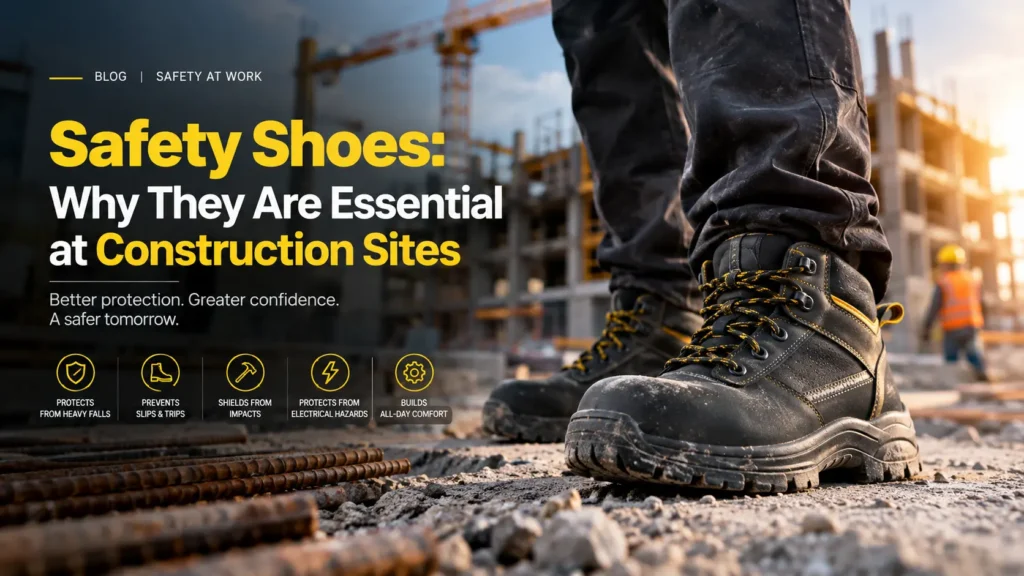
Safety Shoes: Why They Are Essential at Construction Sites
Construction sites are busy and potentially hazardous workplaces where workers are exposed to falling objects, sharp materials, slippery surfaces, heavy machinery, and electrical hazards. Among the most important pieces of personal protective equipment (PPE), safety shoes play a crucial role in protecting workers’ feet from workplace injuries.
Choosing the right safety shoes is not simply about comfort. The right pair can provide protection against multiple hazards while allowing workers to perform their jobs safely and efficiently.
Why Are Safety Shoes Important at Construction Sites?
Construction workers spend long hours walking, standing, climbing, and working around heavy equipment. Regular footwear does not provide adequate protection against many of the risks found on construction sites.
Safety shoes are specifically designed with protective features such as reinforced toe caps, slip-resistant soles, durable materials, and additional protection depending on the type of work.
1. Protection from Falling Objects
Tools, construction materials, and equipment can accidentally fall from heights or be dropped by workers. Safety shoes with protective toe caps can help protect the toes from serious impact injuries.
2. Protection from Sharp Objects
Construction sites may contain nails, metal pieces, broken materials, and other sharp objects. Safety footwear with strong, puncture-resistant soles can reduce the risk of foot injuries.
3. Better Grip on Slippery Surfaces
Water, oil, dust, and construction materials can make surfaces slippery. Safety shoes with slip-resistant soles provide better traction and help reduce the risk of slips and falls.
4. Protection Against Electrical Hazards
Workers involved in electrical or maintenance work may require specialized footwear designed to provide protection against certain electrical hazards. The appropriate footwear should always be selected according to the specific workplace risk and applicable safety requirements.
5. Improved Comfort During Long Working Hours
Construction workers often remain on their feet for several hours. Properly designed safety shoes can provide better support and comfort, helping workers remain productive throughout the day.
How to Choose the Right Safety Shoes
Before purchasing safety shoes, consider the working environment and the hazards workers may encounter.
Important factors include:
Type of toe protection
Sole and slip resistance
Puncture resistance
Material and durability
Comfort and fitting
Water resistance where required
Electrical protection where applicable
Applicable safety standards and certifications
The right safety shoe depends on the job. A construction worker, electrician, warehouse worker, and industrial worker may have different footwear requirements.
Safety Shoes Are an Investment in Workplace Safety
Providing appropriate protective footwear is an important part of creating a safer workplace. Employers should assess workplace hazards and provide PPE that is suitable for the specific tasks being performed.
For construction companies, contractors, factories, and infrastructure projects, purchasing safety footwear in bulk from a reliable safety equipment supplier can also help maintain consistent PPE standards across the workforce.
Conclusion
Safety shoes are an essential part of construction-site PPE. They help protect workers against common hazards such as falling objects, sharp materials, slippery surfaces, and other workplace risks.
The key is not simply to buy any safety shoe, but to choose footwear that matches the hazards, working conditions, comfort requirements, and applicable safety standards of the job.
For reliable safety footwear and other industrial safety equipment, businesses should work with an experienced safety equipment supplier that can understand their project requirements and provide suitable products.